
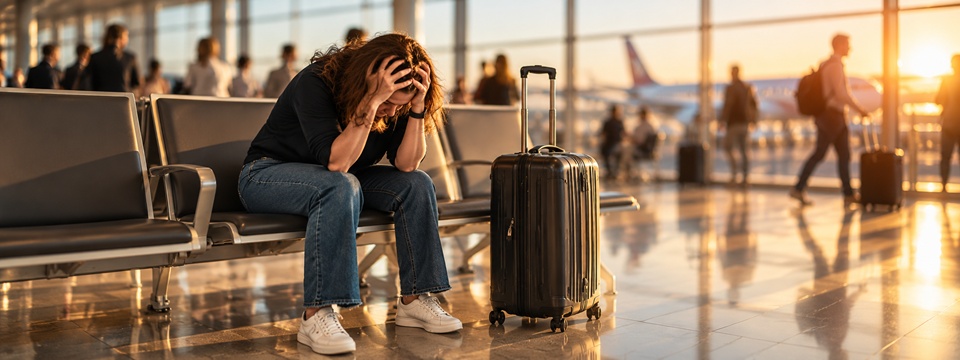
Why the new year doesn’t automatically mean a new you
It’s early December, the “silly season” begins… and so does another familiar pattern.
Your shoulders creep up a little higher; jaw gets a little tighter… You’re feeling tired, but somehow you can’t switch off. Little things that wouldn’t have bothered you in April start to wear you down.
And each year we tell ourselves the same thing, “It’ll be alright when the holidays start.”
Then the break finally arrives
When the break comes, for many people, the first few days don’t feel like rest at all.
Some feel flat. Some get sick almost as soon as they stop, others are strangely irritable. Some spend half their holiday just coming down. And others finish their holiday wondering if they benefitted much at all.
This is a real thing, researchers have even given it a name “Leisure Sickness” . . .
In the Netherlands, Tilburg University surveyed almost 1,900 adults and found that the most common complaints for getting sick when going on holidays were colds and flu, headaches, fatigue, muscle aches. Many had been experiencing this pattern for more than ten years.
In a 2014 study published in the journal Neurology, people with migraine were more likely to have an attack 6 to 18 hours after their stress levels had reduced.
A 2010 Work & Stress study tracking workers before and after their holidays found that worker’s health and wellbeing levels generally returned to their pre-holiday levels by the end of the first week back; showing that within the first week of going back to work the benefits of a holiday can disappear and the body resumes its habitual patterns of stress.
I’ve seen it this phenomenon in practice for years. People push through to the finish line and the moment all that pressure lifts their body finally has the chance to show what it’s been carrying all year. This isn’t a sign your body is failing you…
It’s a sign of how much it was helping you hold it together. It’s also a lesson that, when it comes to stress, rest isn’t the same as resolution.
The year resets. Your nervous system probably won’t.
At midnight on new years eve, the calendar automatically starts again. Your body doesn’t know that…
Your nervous system learns through repetition. Every time it meets a challenge, it braces to defend itself, it adapts and prepares. When the bracing happens often enough, it stops being a one-off response and starts becoming a habit. Our modern world hijacks your body to stay vigilant, even when there’s no real immediate threat.
We evolved for the jungle where, if a threat appeared, your body would brace to defend you. Then, as soon as the threat passed, your body would reset. Simple…
We now live in a human zoo, where deadlines roll into school runs, school runs into bills and bills into the latest news about global conflict. That bracing and vigilance barely gets the chance to stop, and that’s how the habit forms.
At Foundation we use the term Physically Retained Stress to describe the tension and vigilance and patterns of unresolved stress the body holds onto long after your stressful moments have passed.
Psychiatrist Bessel van der Kolk famously said, “The body keeps the score”… Well, the body certainly shows the score, as the nervous system keeps replaying your unresolved stress.
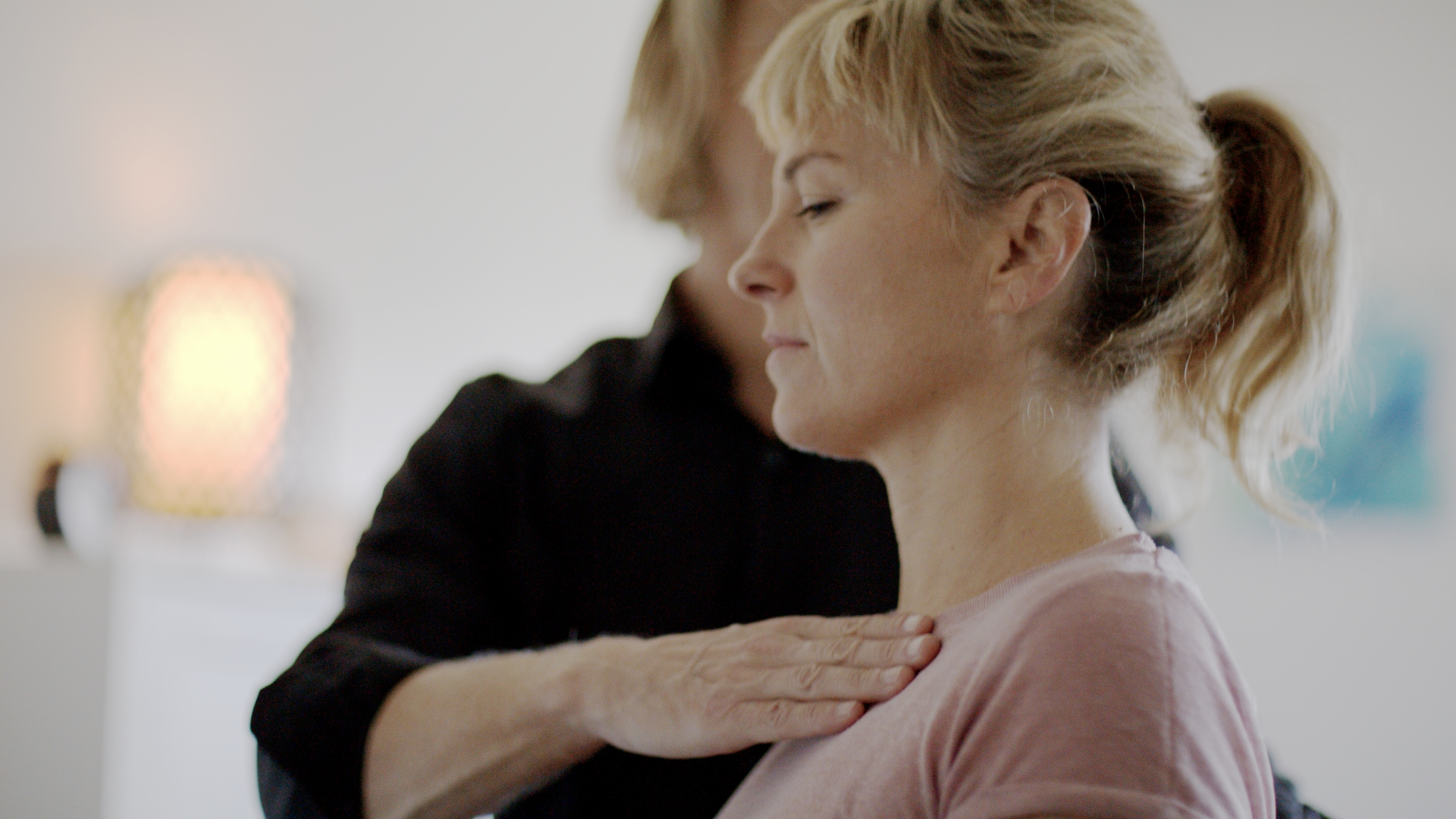
What you might be carrying from 2026…
Physically Retained Stress doesn’t always suddenly announce itself. More often it shows up quietly:
Tension in your neck and shoulders
Shallow breathing and repeated sighing
Sleep that doesn’t leave you rested
Feeling “tired but wired” and having a shorter fuse than you’d like
None of these necessarily mean you are broken. It’s more likely to mean your body has been working hard to look after you.
Rest isn’t the same as Resolution
As the science shows, a holiday lets you rest the mind. It doesn’t always resolve the habits your body is holding on to.
That’s because resolution isn’t simply relaxation. It’s a process in which the nervous system recognises that protection is no longer needed and learn to let go. When a pattern has become habitual, a few days away often isn’t enough for real change.
The good news is that, with the necessary input, your system can learn a better way. A body that has learned to store stress can learn to integrate it, evolve and become resilient. That’s our focus at Foundation; helping your nervous system better deal with stress.
A quick end-of-year check-in:
Is your body relaxed right now, are you holding tension anywhere?
Are you ruminating, a lot on in your mind?
Does sleep come easy, and do you wake up feeling fully rested?
What to do…
Don’t let the stress from this year show up again and repeat next year, and don’t let it ruin your holiday break.
If you’ve been a Foundation patient before, I’ve put together a Year End Catch-Up to help you leave this year’s baggage behind: Beginning with a re-check of your PRS Index, a Multi-Level Tonal Map of your spine and a 3D posture analysis, so you can see where you’re at now and what we can change by the time you head off for your break. Call or text Andrew for more details.
If you’re new to Foundation, an easy first step is a complimentary Intro Consult. Its simply a no-obligation conversation, just call or text on 0472 679 492. We can discuss your concerns, your goals, and see if our approach might suit you.
Sources:
- Leisure sickness: a pilot study on its prevalence, phenomenology and background (Tilburg University)
- Reduction in perceived stress as a migraine trigger: testing the “let-down headache” hypothesis (Neurology, 2014)
- Effects of vacation from work on health and well-being: Lots of fun, quickly gone (Work & Stress, 2010)
- Do we recover from vacation? Meta-analysis of vacation effects (Journal of Occupational Health, 2009)
With Love,
Andrew Maher.
NeuroStructural Chiropractor.